
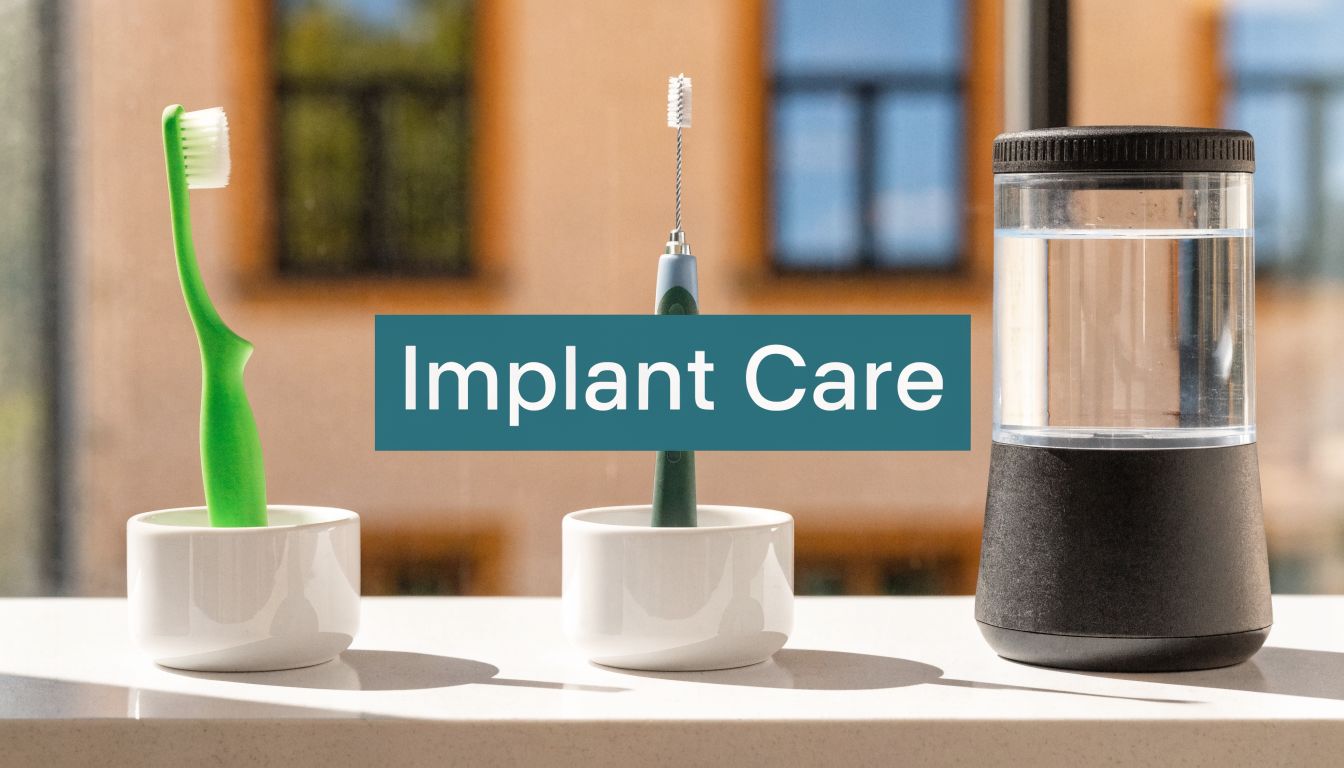
If a new implant was placed recently, there’s a good chance the same question is coming up every time the tongue drifts toward that area. “Am I cleaning this the right way?” That’s a smart question, because an implant can feel solid quickly while the tissues around it still need careful attention.
Patients looking up how to care for dental implants usually want simple guidance they can trust. They also want to know what matters, what can wait, and what mistakes cause trouble later. The good news is that implants have strong long-term reliability when they’re maintained well. A large follow-up study reported implant-level cumulative survival rates of 98.9% at 3 years, 98.5% at 5 years, 96.8% at 10 years, and 94.0% at 15 years, with peri-implantitis occurring in 2% at 2 to 3 years and 7.1% at 8 to 10 years in that dataset, according to long-term implant survival and maintenance findings.
For families searching for a dentist in Amanda, OH, or a dentist near Lancaster, Circleville, or Carroll, implant care works best when it becomes a long-term routine, not a one-time set of instructions after surgery. That means good daily cleaning at home, smart food and habit choices during healing, and regular professional maintenance to catch problems early.
Table of Contents
- Your New Smile Is an Investment Worth Protecting
- Your Immediate Post-Surgery Care Plan
- Building Your Daily Implant Cleaning Routine
- Advanced Care for Overdentures and Full-Arch Implants
- Your Professional Maintenance Schedule at Amanda Family Dental
- Warning Signs and When to Call Your Dentist in Amanda OH
Your New Smile Is an Investment Worth Protecting
A dental implant isn’t just a replacement tooth. It restores chewing, supports speech, and helps many patients feel like themselves again when they smile. That’s why the days and months after treatment matter so much.
An implant is also a long-term investment in health. The crown may look like a tooth, but the success of the whole system depends on the tissues around it staying clean and stable. Plaque doesn’t care whether it lands on natural enamel or around an implant abutment. If it sits there, the gums can become inflamed and the supporting bone can be affected over time.
That’s where expectations need to be realistic. Implants are durable, but they aren’t maintenance-free. The patients who do best usually treat implant care the same way they’d protect any major health investment. They follow the post-op instructions closely, keep a consistent home routine, and stay on schedule with checkups.
Practical rule: A well-placed implant still needs a well-maintained environment around it.
For many people, the hardest part isn’t brushing. It’s knowing which habits help and which ones only feel helpful. Scrubbing harder doesn’t clean better. Skipping flossing around an implant because “it’s not a real tooth” doesn’t save time. Waiting until there’s soreness to schedule a visit usually means the problem has had time to grow.
Patients who want a broader overview of implant treatment and what the process looks like can review this complete guide to dental implants and what to expect.
A strong result usually comes from a partnership mindset. The office handles planning, placement, follow-up imaging, and professional maintenance. The patient handles the day-to-day details that keep plaque and irritation under control. When both sides do their part, the implant has the best chance to stay healthy for years.
Your Immediate Post-Surgery Care Plan
You get home after implant surgery, the numbness starts to fade, and the first question is usually simple: “How careful do I need to be tonight?” The answer is very careful, but not anxious. The first two weeks are about protecting the area, keeping it clean in a gentle way, and giving your body a calm environment to heal.

At Amanda Family Dental, I tell patients to focus on a few basics early on. Rest more than usual. Keep pressure and irritation off the surgical site. Follow the written instructions you were given, even if the area starts feeling better sooner than expected.
The first few days matter most
Days 1 through 3 are usually the most uncomfortable. Swelling often peaks during that window, which can be unsettling if a patient was not expecting it. During this time, the surgical site should not be poked, brushed harshly, or checked with fingers or the tongue.
A simple recovery rhythm works well:
- Rest with your head raised. That often helps with swelling and makes the first night easier.
- Use ice as instructed. Short intervals tend to be more helpful than keeping an ice pack on continuously.
- Rinse gently with salt water if we recommended it. Let the rinse move passively and spit carefully.
- Take medications exactly as directed. Staying ahead of discomfort is easier than trying to catch up later.
Small choices make a difference here.
Patients often feel more normal around days 4 through 7 and assume the area is ready for regular chewing and regular brushing. That is where setbacks happen. Feeling better and being healed are not the same thing, so the site still needs gentle handling for the rest of that first stretch.
Swelling and mild soreness can be part of a normal recovery. Pain that gets worse, drainage, a bad taste, fever, or bleeding that does not settle down deserves a call to our office.
What to eat and what to avoid
Food should be easy on the healing area. Soft meals usually work best at first. Eggs, yogurt, lukewarm soups, mashed foods, and smoothies eaten without a straw are usually easier than anything crunchy, sticky, or chewy.
A few habits are especially likely to slow healing:
- Crunchy foods can push small particles into the surgical area.
- Very hot foods and drinks can irritate tender tissue.
- Smoking and alcohol can interfere with healing and increase complication risk.
- Straws or forceful sucking can create pressure where the site needs stability.
If you have a history of gum problems, healing usually goes better when the tissue around the implant stays as healthy as possible. Our guide to maintaining healthy gums and preventing gum disease explains the habits that support that process.
By weeks 2 through 4, many patients can ease back toward a more normal routine, but the timing is different for every case. A single implant, a healing abutment, and an implant supporting a denture do not all recover the same way. That is one reason I prefer a partnership approach. We monitor how you are healing, tell you when to add tools back in, and adjust instructions if you have more than one implant or a removable overdenture.
If something feels off before your next check, call Amanda Family Dental. I would rather answer a small question early than have you guess and lose healing time.
Building Your Daily Implant Cleaning Routine
Long-term implant care becomes simple once the right tools are in place. The goal isn’t to attack the implant. The goal is to remove plaque every day without scratching surfaces or irritating the gumline.
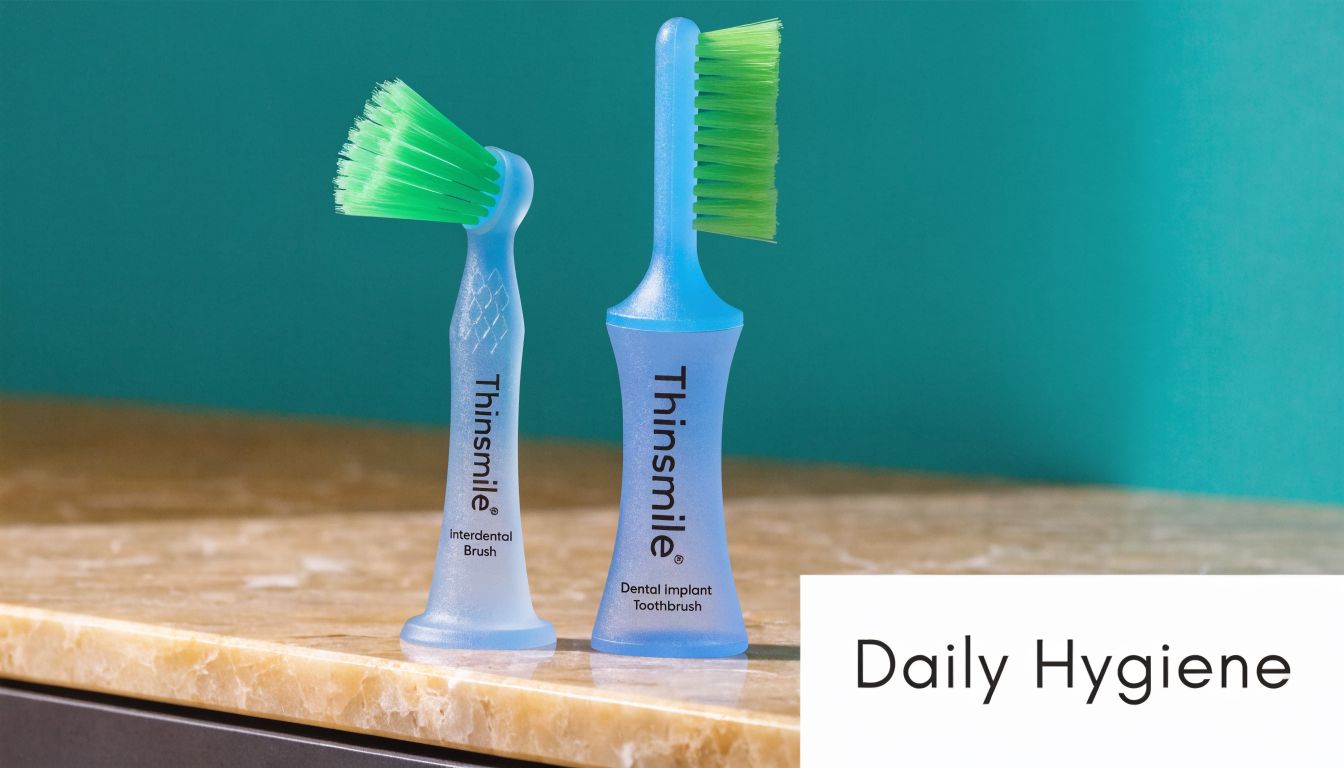
Evidence-based maintenance guidance reports that 95% to 98% 10-year survival rates depend on rigorous daily cleaning, including brushing twice daily with a soft-bristle brush at a 45° angle to the gum junction and using tools such as a Waterpik or interdental brushes to disrupt plaque, as noted in this implant maintenance protocol.
The tools that work
A few products tend to make implant care easier and more predictable:
- Soft-bristle manual toothbrushes help clean around the crown and gumline without over-scrubbing.
- Powered toothbrushes can work well for patients who rush with a manual brush.
- Interdental brushes are useful for narrow spaces where a regular brush can’t reach.
- Water flossers such as a Waterpik help flush debris from around implant-supported areas.
- Low-abrasive toothpaste is a better choice than gritty whitening pastes.
Patients who are also focused on protecting the surrounding gum tissue can benefit from healthy gum care habits that reduce irritation and inflammation.
Technique matters more than force
The best brushing angle is usually gentle and deliberate. Aim the bristles toward the gumline at about 45 degrees and let the brush do the work. Hard scrubbing doesn’t remove plaque more effectively. It just makes tissues sore and can make patients avoid the area the next day.
Flossing around implants also needs a little more intention than many patients expect. The point is to clean along the sides and just under the contact areas without snapping the floss down into the tissue. If regular floss feels awkward, an interdental brush or water flosser often leads to better consistency.
This short demonstration gives patients a good visual for home care technique:
A strong daily routine usually looks like this:
- Morning brush. Focus on the gumline, not just the visible chewing surface.
- Once-daily between-teeth cleaning. Use floss, an interdental brush, or both depending on the restoration.
- Evening brush. Slow down and clean around the implant collar carefully.
- Water flosser use when recommended. This is especially helpful around areas that trap food.
The implant itself won’t get a cavity. The gums and bone around it can still become unhealthy if plaque stays in place.
What doesn’t work well is an on-and-off routine. Patients who clean thoroughly for a few days after a visit, then drift back into quick brushing, usually miss the places where inflammation starts.
Advanced Care for Overdentures and Full-Arch Implants
Single implants are relatively straightforward. Overdentures and full-arch restorations are different. They create extra surfaces, under-bridge spaces, and small attachment components that need direct attention.
General guides often miss those details. According to implant overdenture and full-arch maintenance guidance, these restorations need targeted cleaning, including brushing the underside of the prosthetic daily, checking components such as O-rings for wear, and using water flossers or proxy brushes under bridges to help prevent peri-implant problems.
Overdentures need hands-on daily care
An implant overdenture should be removed and cleaned thoroughly. Patients who only brush the visible outer side often leave a film on the tissue side and around the attachment housings. That buildup can lead to odor, irritation, and sore spots.
A useful routine includes:
- Remove the overdenture carefully. Don’t twist or force it.
- Brush the underside every day. A soft denture brush works well for broad surfaces.
- Soak it overnight if recommended. Use a cleaner made for the prosthetic material.
- Inspect attachment parts. O-rings, locator caps, and clips can wear and may need attention if retention changes.
Patients exploring replacement options for larger restorations can review full-arch dental implant information and treatment considerations.
Full-arch bridges collect debris underneath
A fixed full-arch bridge feels secure, but food and plaque can gather underneath where the bridge meets the gums. That area doesn’t clean itself. A standard toothbrush usually can’t reach far enough under the prosthesis to do the job alone.
For fixed arches, the most reliable tools are usually a water flosser and proxy brush. The water flosser can flush under the bridge, while the proxy brush can disrupt sticky buildup at the margins. Patients do best when they clean from multiple angles instead of trying one straight pass and assuming the space is clear.
A simple way to judge the routine is by feel and smell. If the bridge still feels coated or there’s recurring odor after cleaning, the method probably needs adjustment. That’s often a technique issue, not a product issue.
Your Professional Maintenance Schedule at Amanda Family Dental
Home care does the daily work. Maintenance visits protect the parts you cannot judge well on your own, especially gum attachment, bite pressure, bone changes on X-rays, and wear on the crown, bridge, or denture components.
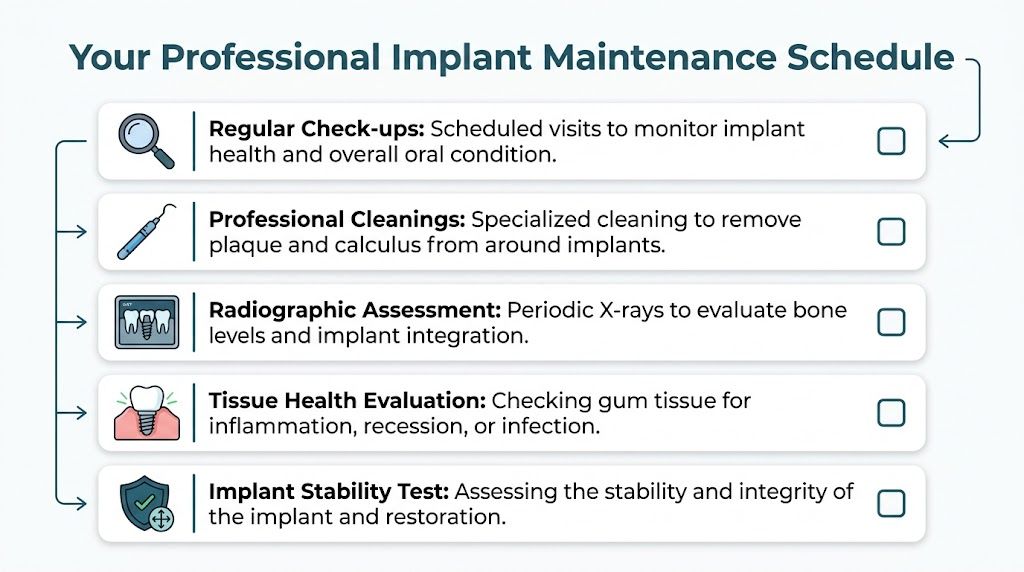
I tell patients this often. A dental implant can last for many years, but it does best with a schedule, not occasional check-ins after something starts to feel off. At Amanda Family Dental, we set that schedule around the type of implant you have, how easy it is for you to clean at home, your gum health history, and whether you clench, grind, or wear attachments that need periodic replacement.
What happens at implant maintenance visits
An implant maintenance appointment is more specific than a standard cleaning visit. We examine the tissue seal around the implant, measure areas that may be inflamed, remove buildup with implant-safe instruments, and check whether the restoration is handling normal chewing forces correctly.
We also look for practical problems that patients feel before they can name them. Food packing in one spot. A bridge that is harder to clean than it was six months ago. An overdenture that does not snap in with the same retention. Those details matter because they often point to a fixable issue early.
Professional maintenance commonly includes:
- A clinical exam to assess the implant, surrounding gums, and neighboring teeth
- Professional cleaning with instruments and polishing methods selected for implant surfaces
- Digital X-rays when needed to compare bone levels over time
- Bite and function checks to catch excess pressure on the implant or restoration
- Component review for crowns, bridges, overdenture attachments, screws, O-rings, or locator parts that may be wearing down
- Home-care coaching so cleaning techniques match the design of your implant restoration
The goal is early course correction. Small changes in tissue health or prosthetic fit are usually simpler and less expensive to manage than advanced inflammation or a broken component.
A simple long-term schedule
The right recall interval is not identical for every patient. A single implant crown with healthy tissue may stay on a different schedule than a full-arch case or an overdenture with parts that wear faster.
| Timeframe | Key Actions | Recommended Frequency |
|---|---|---|
| Early healing phase | Check healing, review comfort and function, remove sutures if needed, answer care questions | As directed after surgery |
| First year | Monitor tissue response, clean around the implant, review home care, take imaging if indicated | Every 3 to 6 months |
| Long-term maintenance | Professional implant cleaning, gum and bite evaluation, component inspection, periodic X-rays | Every 3 to 6 months |
For some patients, every six months is reasonable. Others do better every three or four months, especially if they have a history of gum disease, smoke, build plaque quickly, wear a full-arch restoration, or need closer monitoring of overdenture attachments.
That is the partnership piece. You handle the daily routine at home, and our team handles the clinical monitoring, maintenance, and adjustments that protect your investment over the long term. If it has been a while since your last implant check, schedule your next visit with Amanda Family Dental so we can keep everything stable, comfortable, and easier to maintain.
Warning Signs and When to Call Your Dentist in Amanda OH
Most implant concerns are manageable when they’re caught early. Waiting is the part that creates bigger problems. If an area starts to feel different and keeps getting worse, that change deserves attention.
Peri-implantitis and infection can affect 2% to 7.1% of implants over time and are often linked to inadequate hygiene, with prompt professional care being important for protecting the implant, according to this review of implant complications and prevention.
What should not be ignored
Patients should call if they notice symptoms such as:
- Persistent swelling that doesn’t settle or returns after seeming better
- Bleeding around the implant during cleaning that becomes frequent
- Pain with pressure or chewing that feels new or is getting worse
- Bad taste, drainage, or odor around the implant area
- A loose feeling in the crown, bridge, or denture attachment
- Gums that look puffy or receded around the implant
Not every one of those signs means the implant is failing. Sometimes the problem is trapped debris, inflamed soft tissue, or a restoration component that needs adjustment. The important part is getting it examined before irritation turns into something harder to reverse.
Why early action protects the implant
Patients sometimes hesitate because they don’t want to overreact. That instinct is understandable, but it usually works against them. Implant problems rarely improve because they were ignored for another week.
If the implant area feels steadily worse instead of steadily better, it’s time to call.
That matters even more for patients trying to find an emergency dentist in Amanda, Lancaster, Circleville, or Carroll. Quick evaluation can help determine whether the issue is minor and easily corrected or whether treatment needs to happen right away. Either way, a clear answer is better than guessing at home.
If you're looking for a trusted Amanda Family Dental team to help protect your implant for the long run, Dr. Alyssa Jenkins and the team welcome patients from Amanda, Lancaster, Circleville, and Carroll, Ohio. Whether you need a new patient exam, implant follow-up, digital x-rays, a professional cleaning, or prompt care for swelling, soreness, or a loose restoration, the office is ready to help. Schedule an appointment to keep your implant healthy, comfortable, and working the way it should.