

A lot of people searching for what is sleep dentistry are in the same place emotionally. They know they need dental care, but they keep putting it off. Sometimes it’s a routine cleaning. Sometimes it’s a broken tooth, a tooth extraction, dental implants, or cosmetic work they’ve wanted for years. The problem isn’t the treatment itself. It’s the fear of the visit.
That fear is common. Approximately 30% of the population avoids dentist visits due to fear, which keeps many people from getting care they need, from cleanings to extractions and implants, according to sedation dentistry statistics summarized here. For families around Amanda, OH, Lancaster, OH, Circleville, OH, and Carroll, OH, sleep dentistry can change that pattern.
Sleep dentistry gives anxious patients a path back into dental care. It can make it easier to sit through treatment, feel calm in the chair, and finally move forward with the care that supports comfort, health, and confidence.
Table of Contents
- Your Search for a Gentle Dentist in Amanda OH
- What Exactly Is Sleep Dentistry
- Types of Sedation Dentistry We Offer
- Who Can Benefit from Sleep Dentistry
- Your Safety is Our Top Priority at Amanda Family Dental
- Take the First Step Toward Fear-Free Dental Care
- Frequently Asked Questions About Sleep Dentistry
- Will a patient be completely unconscious
- Is sleep dentistry only for people with severe phobia
- Can children receive sedation dentistry
- Can sleep dentistry help with routine care
- What is the difference between sedation dentistry and dental sleep medicine
- Does sleep dentistry mean a patient can move ahead with bigger treatment goals
Your Search for a Gentle Dentist in Amanda OH
A patient in Amanda might notice a tooth that hurts when chewing and still wait months to call. Another in Lancaster may have an old filling that fell out but keep hoping it settles down on its own. A parent in Circleville might know a child needs an exam, yet worry that a stressful appointment will become a lasting memory.
That kind of delay doesn’t come from laziness. It comes from anxiety, embarrassment, or a difficult past experience.
Why fear keeps people away
Some people feel nervous as soon as they smell a dental office. Others worry about gagging, needles, sounds, or feeling out of control. Some have been told they need extensive restorative dentistry and feel overwhelmed before treatment even starts.
Many anxious patients don’t need pressure. They need a clear explanation, a slower pace, and a comfort plan that fits them.
For readers searching for a dentist near me, a dentist in Amanda, OH, or a dentist in Lancaster, OH, the primary question isn’t only where to go. It’s whether the office will understand why dental care feels hard in the first place.
A different path forward
Sleep dentistry offers a practical option for people who’ve been avoiding care. It can help make room for the dental goals that fear has been blocking, whether that means new patient exams, dental x-rays, a root canal, tooth extraction, cosmetic dentistry, or planning for dental implants near me.
Patients who are still deciding what to look for in a practice can review guidance on choosing your ideal dentist and pay close attention to one factor above all. Comfort should be part of care, not an afterthought.
For families in Carroll, OH and nearby communities, that matters. Gentle dentistry isn’t just a style. For many people, it’s the reason treatment becomes possible again.
What Exactly Is Sleep Dentistry
Sleep dentistry is another name many people use for sedation dentistry. The phrase can be misleading because most patients aren’t fully unconscious. In most cases, they remain able to respond, but they feel more relaxed and less focused on the procedure.
That’s why many nervous patients find it easier than they expected. Instead of feeling tense from start to finish, they feel calm, drowsy, or detached from the usual stress of treatment.
What it does during a dental visit
Sleep dentistry helps quiet the body’s fear response. A simple way to think about it is that the treatment still happens, but the mind and body don’t react with the same level of alarm.
That can make a major difference for someone who has postponed care for years. A patient who couldn’t imagine getting through a filling may be able to complete restorative dentistry comfortably. Someone who kept delaying cosmetic dentist near me searches may finally feel ready to move ahead with whitening, veneers, or Invisalign planning.
What it isn't
It isn’t the same as hospital anesthesia. Verified guidance on sedation levels notes that sleep dentistry includes four levels of sedation, from minimal to general anesthesia, which allows care to be matched to a patient’s anxiety and the complexity of treatment, as explained in this overview of the four distinct levels of sedation used in sleep dentistry.
For many dental patients, the goal isn’t to be fully asleep. The goal is to feel safe, calm, and able to complete care.
A short video can help make that idea feel familiar.
Why understanding this matters
People avoid calling because they assume sedation is only for major surgery or extreme cases. It isn’t. Depending on the patient and the procedure, it may be considered for cleanings, fillings, crowns, root canals, extractions, and longer treatment appointments.
Practical rule: If fear is keeping someone from scheduling care, it’s worth asking about sedation options before deciding treatment is impossible.
Types of Sedation Dentistry We Offer
A parent in Amanda may put off a cleaning for years because of fear, then feel embarrassed when the problem grows into a broken tooth, missing tooth, or treatment plan that sounds overwhelming. Sedation can change that path. It helps many anxious patients get back into the chair, catch up on overdue care, and finally move toward goals like implants, cosmetic improvements, or routine visits that no longer feel out of reach.
Different patients need different kinds of support. A teenager nervous about x-rays needs something very different from an adult who has avoided dentistry for a decade and now needs several procedures completed comfortably.
Patients exploring sedation dentistry options and related education want clear answers to three practical questions. How will this feel, who is it meant for, and what should I expect afterward?
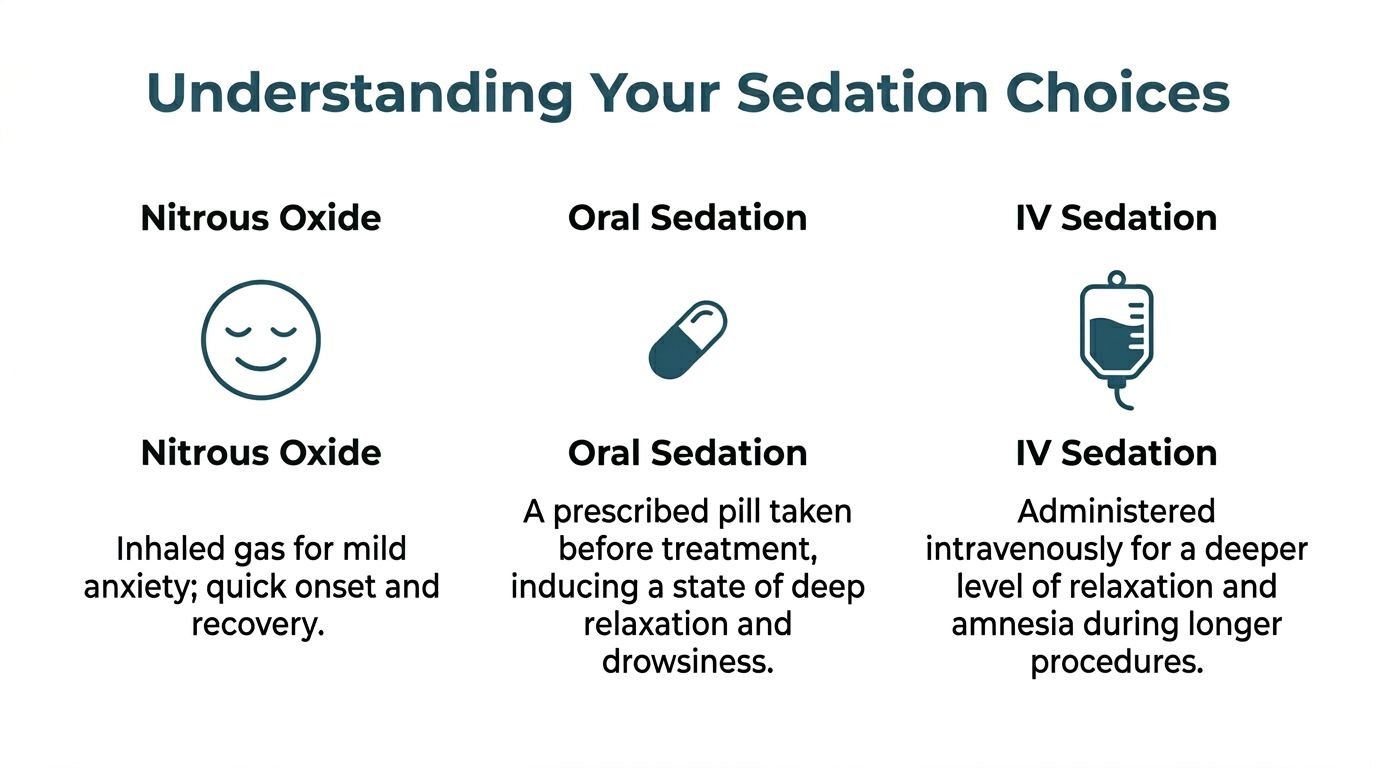
Nitrous Oxide
Nitrous oxide, called laughing gas, is the lightest option many patients know by name. You breathe it in through a small nose piece during treatment, and its calming effect starts quickly.
This option works well for mild to moderate anxiety, a strong gag reflex, or nerves about everyday care such as cleanings, exams, fillings, or x-rays. Patients stay awake and able to respond, but they feel more relaxed and less tense.
What patients notice with nitrous oxide
- Quick relief: The calming effect starts within minutes for many patients.
- Light relaxation: People describe feeling calm, floaty, or less bothered by the sounds and sensations of treatment.
- Easy recovery: The effects wear off fast enough that many patients can return to normal activities soon after the visit.
For someone who wants a gentler introduction to sedation, nitrous oxide is a good starting point.
Oral Conscious Sedation
Oral conscious sedation means taking a prescribed pill before the appointment. It creates a deeper level of relaxation than nitrous oxide for many patients, which can make a longer visit feel far more manageable.
It is a good fit for stronger anxiety, a history of postponing treatment, or appointments that involve more than one procedure. Patients describe feeling drowsy, calm, and less aware of time passing. Many remember only parts of the visit.
A simple comparison can help. Nitrous oxide is like lowering the volume on dental stress. Oral sedation lowers it more, so your body is less likely to stay in that tense, braced-for-it feeling.
This option can open the door to care that anxious patients postpone, such as crowns, root canals, multiple fillings, or the first phase of larger treatment plans.
IV Sedation
IV sedation allows medication to be given through a vein during treatment, so the level of sedation can be adjusted throughout the visit. It is considered for severe anxiety, lengthy procedures, or situations where completing more treatment in fewer appointments would help.
This is the option many patients mean when they ask about sleep dentistry. Even so, the goal is deep relaxation, not full general anesthesia. Patients are calm, remember little, and can get through care that once felt impossible.
Here is a simple side-by-side comparison:
| Sedation option | Best fit for | General feel | Recovery |
|---|---|---|---|
| Nitrous oxide | Mild anxiety, shorter visits | Light relaxation | Usually quick |
| Oral conscious sedation | Moderate anxiety, longer visits | Drowsy, very relaxed | Needs more recovery planning |
| IV sedation | Strong anxiety, complex care | Deeper relaxation, limited memory | Requires monitoring and an escort |
The right choice depends on your anxiety level, medical history, and the kind of dental work you need. A short hygiene visit calls for a different approach than extractions, implant treatment, or a plan to rebuild a smile after years of avoidance.
Who Can Benefit from Sleep Dentistry
For some people, the need is obvious. They know they’re afraid of the dentist. For others, the signs are subtler. They cancel appointments, put off treatment until there’s pain, or keep saying they’ll get to it after life calms down.
Research summarized here notes that 30% to 80% of adults experience some level of dental anxiety, and up to 16% have a severe phobia that leads them to avoid care, according to these dental anxiety and sedation dentistry statistics.

Common reasons patients consider it
Sleep dentistry may help patients who relate to any of these situations:
- Strong dental fear: Appointments trigger panic, sleeplessness, or repeated cancellations.
- Sensitive gag reflex: Even x-rays, impressions, or routine treatment feel difficult.
- Trouble sitting still: Long appointments are hard because of tension, discomfort, or physical limitations.
- Past negative experiences: A painful or frightening visit still affects current decisions.
- A lot of treatment at once: Combining procedures may feel more realistic with sedation support.
- Difficulty moving forward with goals: Anxiety has delayed cosmetic dentistry, tooth replacement, or restorative work.
Some patients don’t realize that sedation can be a gateway to progress. It may be the reason a person finally addresses a damaged tooth, starts a treatment plan for missing teeth, or stops postponing the consultation for a cosmetic smile update.
It supports more than emergency care
Sedation isn’t only for extractions or urgent treatment. It can also open the door to extensive care.
A patient searching for dental implants near me may need fillings, gum care, or an extraction first. Another searching for a cosmetic dentist near me may want veneers or whitening but hasn’t had a cleaning in years because of anxiety. Sleep dentistry can help connect those first steps to the bigger result the patient wants.
Readers who recognize their own symptoms can explore resources related to dental anxiety and use that as a starting point for a more comfortable conversation about care.
Your Safety is Our Top Priority at Amanda Family Dental
For many anxious patients, safety is the question underneath every other question. Will I feel out of control. Will someone notice if I am having trouble. Will this really be done carefully?
Those concerns are reasonable. Sleep dentistry should never feel mysterious. It should feel organized, explained, and closely supervised from start to finish.
What careful planning looks like
Safe sedation starts before the appointment. The team reviews medical history, current medications, past reactions to anesthesia or sedation, anxiety level, and the kind of treatment planned. That is how a dentist decides which option fits the patient, and whether sedation is appropriate at all.
Pre-visit instructions matter too. Some patients need guidance about eating and drinking before the visit. Others need a ride home and a lighter schedule afterward. Clear instructions lower surprises, and fewer surprises usually means less fear.
A good way to understand this is to compare sedation to planning a road trip. The treatment itself is the destination, but safety depends on the route, the vehicle, the weather, and who is driving.
Monitoring during treatment
Once treatment begins, the focus shifts to observation and adjustment. The team watches how the patient is doing throughout the visit, including breathing, pulse, blood pressure, and oxygen levels when the type of sedation calls for that level of monitoring.
That steady attention matters. A nervous patient may worry that sedation means being left alone in the chair. In fact, the opposite is true: sedation care involves more watching, not less.
At Amanda Family Dental, patient comfort and patient safety go together. If someone has postponed care for years, that close monitoring can be the reason a cleaning, a repair, or a larger treatment plan finally feels possible.
What patients can expect around the appointment
Safety also includes the pace of the visit and the way information is explained. Patients do better when they know what will happen first, what they may feel, and what the team is doing at each stage.
At Amanda Family Dental, that may include digital x-rays, a new patient exam, and a step-by-step treatment plan arranged in a practical order. For one patient, the first goal may be getting out of pain. For another, it may be getting healthy enough for implants or cosmetic work after years of avoiding routine care. Sleep dentistry makes that first step realistic.
This is one reason anxious patients describe sedation as more than a comfort option. It can be the bridge between avoiding the dentist and finally getting the care needed for long-term dental health.
Recovery and support after treatment
Recovery instructions are part of safe care. Patients who receive deeper sedation need an escort home, time to rest, and clear aftercare guidance. The team explains what is normal, what to avoid for the rest of the day, and when to call with questions.
That clarity helps families feel grounded. When patients know what to expect before, during, and after the visit, treatment feels less intimidating and more manageable.
Take the First Step Toward Fear-Free Dental Care
Fear can make dental problems seem bigger than they are. It can also keep a small problem from staying small. Sleep dentistry gives anxious patients another option.
For some, that means finally booking a cleaning and exam. For others, it means getting help for a painful tooth, moving ahead with restorative dentistry, planning a tooth extraction, or restarting the conversation about cosmetic improvements and dental implants.
A simple way to move forward
The next step doesn’t have to be a major commitment. It can start with a consultation and a conversation about comfort.
A patient can ask:
- Which sedation option fits the procedure
- What recovery will look like
- Whether treatment can be broken into manageable visits
- How to prepare for the appointment
For families in Amanda, OH, Lancaster, OH, Circleville, OH, and Carroll, OH, a calm and practical plan can make dental care feel possible again. That’s often the turning point.
Frequently Asked Questions About Sleep Dentistry
Will a patient be completely unconscious
No. Most forms of sleep dentistry used in dental offices are designed to help the patient relax significantly while remaining responsive. The term “sleep dentistry” is common, but it refers to sedation rather than full unconsciousness.
Is sleep dentistry only for people with severe phobia
No. It may help patients with severe fear, but it can also help those with moderate anxiety, a strong gag reflex, difficulty sitting through treatment, or a need for longer procedures.
Can children receive sedation dentistry
In some cases, yes. The right option depends on the child’s needs, medical history, and the procedure involved. Parents should expect a detailed discussion of safety, preparation, and recovery before treatment is scheduled.
Can sleep dentistry help with routine care
Yes. Some patients use sedation for more involved treatment, while others need it to get through a cleaning, exam, or x-rays after years of avoidance.
What is the difference between sedation dentistry and dental sleep medicine
This is one of the most common points of confusion. Sedation dentistry helps patients stay calm during dental procedures. Dental sleep medicine focuses on conditions such as obstructive sleep apnea and may use oral appliances to help keep the airway open during sleep. That distinction is explained clearly in this overview of sedation dentistry versus dental sleep medicine.
Does sleep dentistry mean a patient can move ahead with bigger treatment goals
Yes. Once anxiety is better managed, it becomes easier to complete the care that supports long-term oral health and confidence, whether that involves preventive visits, restorative treatment, cosmetic dentistry, or planning for missing teeth.
Amanda Family Dental provides complete family and cosmetic dental care for patients in Amanda, Lancaster, Circleville, and Carroll, Ohio, including preventive visits, restorative treatment, emergency dental services, and comfort-focused options such as sleep dentistry. Readers who are ready to talk through treatment needs, ask questions about sedation, or schedule a consultation can contact Amanda Family Dental.