

A lot of people searching what does a dental cleaning include are doing it for the same reason. They have an appointment coming up, it’s been a while since the last visit, or they’re trying to find a dentist near me who will explain things clearly before anyone leans the chair back.
That uncertainty is normal. Many patients want the same basics answered in plain language. What happens first, what the tools do, whether anything will hurt, and how a routine cleaning differs from a deeper gum treatment.
For families looking for a dentist in Amanda, OH, or nearby care in Lancaster, OH, Circleville, OH, and Carroll, OH, it helps to know that a cleaning is a straightforward preventive visit. It’s designed to remove buildup that daily brushing and flossing can miss, check for early problems, and keep small issues from turning into bigger ones that may later require restorative treatment, a tooth extraction, or even an emergency dentist visit.
Table of Contents
- Your Partner for Comfortable Dental Care in Amanda OH
- The New Patient Exam Your Foundation for Health
- A Step-by-Step Guide to Your Professional Cleaning
- Routine Cleaning vs Deep Cleaning
- Personalizing Your Care at Amanda Family Dental
- Schedule Your Cleaning and Protect Your Smile
Your Partner for Comfortable Dental Care in Amanda OH
Walking into a new dental office can feel like stepping into the unknown. Patients worry about pain, embarrassment, or being told they need more treatment than expected. Most of that anxiety comes from not knowing what’s about to happen.

A cleaning is one of the simplest ways to protect long-term oral health. Plaque can harden into tartar quickly if it isn’t professionally removed, and inadequate oral hygiene contributes to 47.2% gum disease prevalence among adults ages 20 to 64 and a 21.3% rate of untreated cavities, according to these dental health statistics.
That’s why preventive visits matter. They aren’t only about making teeth feel polished. They give the dental team a chance to remove buildup, examine the mouth, and catch concerns before they become painful or expensive.
Clear answers help people feel calmer
Many patients assume a cleaning is one single procedure. In reality, the appointment includes several parts, and each one has a purpose.
- The exam checks health first. Teeth, gums, and existing dental work are reviewed before cleaning starts.
- The cleaning removes buildup. Plaque and tartar are cleared from places home care can miss.
- The finishing steps refine and protect. Polishing, flossing, and sometimes optional preventive treatments may follow.
A good dental visit feels less stressful when the patient knows what each step is for and why it matters.
Local families often want the same thing
Patients in Amanda, OH, Lancaster, OH, Circleville, OH, and Carroll, OH are not looking for complicated explanations. They want a dental team that communicates well, respects comfort, and makes preventive care feel manageable for adults and children alike.
That’s true for anyone comparing options such as cleaning and exams, dental x-rays, cosmetic care, or restorative treatment. A trustworthy visit should feel transparent from the start. The patient should know whether the appointment is a simple routine cleaning, whether gum therapy is needed, and what the next step will be before treatment begins.
The New Patient Exam Your Foundation for Health
A professional cleaning doesn’t start with scraping. It starts with understanding the patient’s mouth.
Why the exam comes first
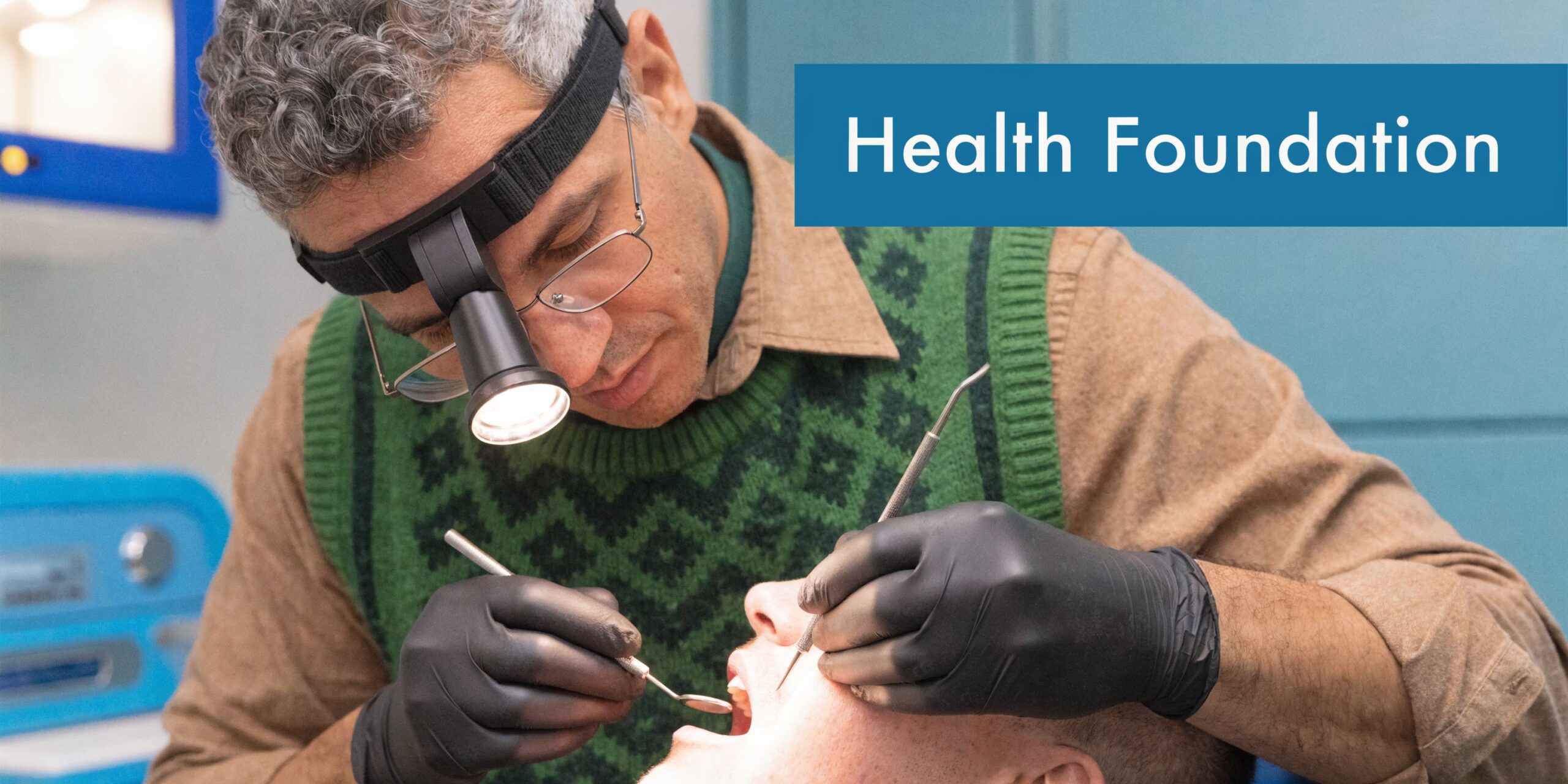
At a first visit, the dental team reviews medical history, current concerns, past dental treatment, and any symptoms such as bleeding gums, sensitivity, jaw soreness, or broken fillings. Then the dentist performs a visual exam to look for signs of cavities, gum irritation, worn enamel, and other concerns that may affect how the cleaning should be done.
Not every patient needs the same kind of care, so the cleaning approach is adjusted accordingly. Some people are due for a standard preventive cleaning. Others may have inflammation, deeper buildup, or gum pockets that call for different treatment.
A careful exam also helps separate cosmetic concerns from health concerns. A patient may come in thinking the problem is staining, while the dentist may also notice recession, an old restoration, or signs that additional treatment planning is needed.
For patients interested in a broader wellness approach, a total health screening can add more context to what’s happening in the mouth and how oral health connects to overall health.
How digital imaging helps
Some conditions can’t be fully evaluated by sight alone. That’s where X-rays help. Digital images let the dentist check areas between teeth, under existing fillings, and below the gumline where hidden problems may be developing.
Patients appreciate seeing this process explained before treatment moves forward.
Digital X-rays support a more personalized plan. If the images show healthy bone levels and no deeper concerns, the patient may be ready for a routine cleaning that day. If they show bone loss, heavy calculus, or other periodontal changes, the dentist can explain why a deeper cleaning may be the better option.
Practical rule: The exam answers an important question before any polishing starts. Is this a preventive visit, or does the mouth need gum treatment first?
That distinction protects the patient. It prevents a one-size-fits-all cleaning and replaces it with care based on what the teeth and gums need.
A Step-by-Step Guide to Your Professional Cleaning
A routine dental cleaning is called prophylaxis. It’s the standard preventive cleaning for patients whose gums are healthy. Most cleanings follow a familiar sequence, and that predictability helps many patients relax.
Step one removes what brushing leaves behind
The first main stage is scaling. This means removing plaque and tartar from the teeth, especially along the gumline and between teeth.
Some of this is done with hand instruments such as scalers or curettes. Many offices also use ultrasonic tools. Ultrasonic scaling uses high-frequency sound waves at 20,000 to 45,000 cycles per second to break up calculus, and it can reduce cleaning time by up to 50% while improving comfort through water irrigation, according to this explanation of traditional and advanced dental cleaning techniques.
For patients, that means two things. The buildup comes off more efficiently, and the stream of water helps rinse away loosened material as the hygienist works.
Some areas may still need hand instruments afterward. That isn’t a sign something is wrong. It means the hygienist is fine-tuning spots that need more precise attention.
A full picture of the teeth starts with imaging as well, and digital X-rays help the team understand where hidden buildup or other concerns may be affecting treatment decisions.
Step two smooths and brightens the surfaces
After the hard deposits are removed, many cleanings include polishing. A small rubber cup or brush with gritty polishing paste smooths the outer surfaces of the teeth.
This step is less about changing the natural color of the teeth and more about removing surface stains and creating a cleaner feel. Coffee, tea, and similar everyday habits can leave superficial discoloration that polishing helps lift.
Patients sometimes confuse polishing with teeth whitening. They’re different. Polishing removes external stain and leaves a smooth finish. Whitening is a cosmetic treatment designed to lighten tooth shade.
Step three checks the spaces between teeth
The final part includes professional flossing or another form of interdental cleaning. This reaches the narrow spaces that are easy to miss at home and helps confirm that leftover debris has been cleared away.
For many patients, this is also where the hygienist notices specific trouble spots and offers simple home-care guidance.
- Crowded teeth: These areas often trap plaque where a toothbrush can’t angle well.
- Back molars: These teeth are harder to reach and often hold more buildup.
- Bridgework or restorations: Special cleaning tools may help patients care for these areas more effectively.
After a routine cleaning, teeth often feel “slick.” That smooth feeling is one sign that rough plaque-retaining surfaces have been cleaned well.
A standard cleaning is straightforward. The tools may sound unfamiliar at first, but each step has one job. Remove buildup, smooth the surfaces, and clean the spaces that are easiest to overlook.
Routine Cleaning vs Deep Cleaning
A lot of confusion comes from the phrase deep cleaning. Patients may hear it and assume it’s just a more intense version of a normal cleaning. It isn’t.
When a routine cleaning is enough
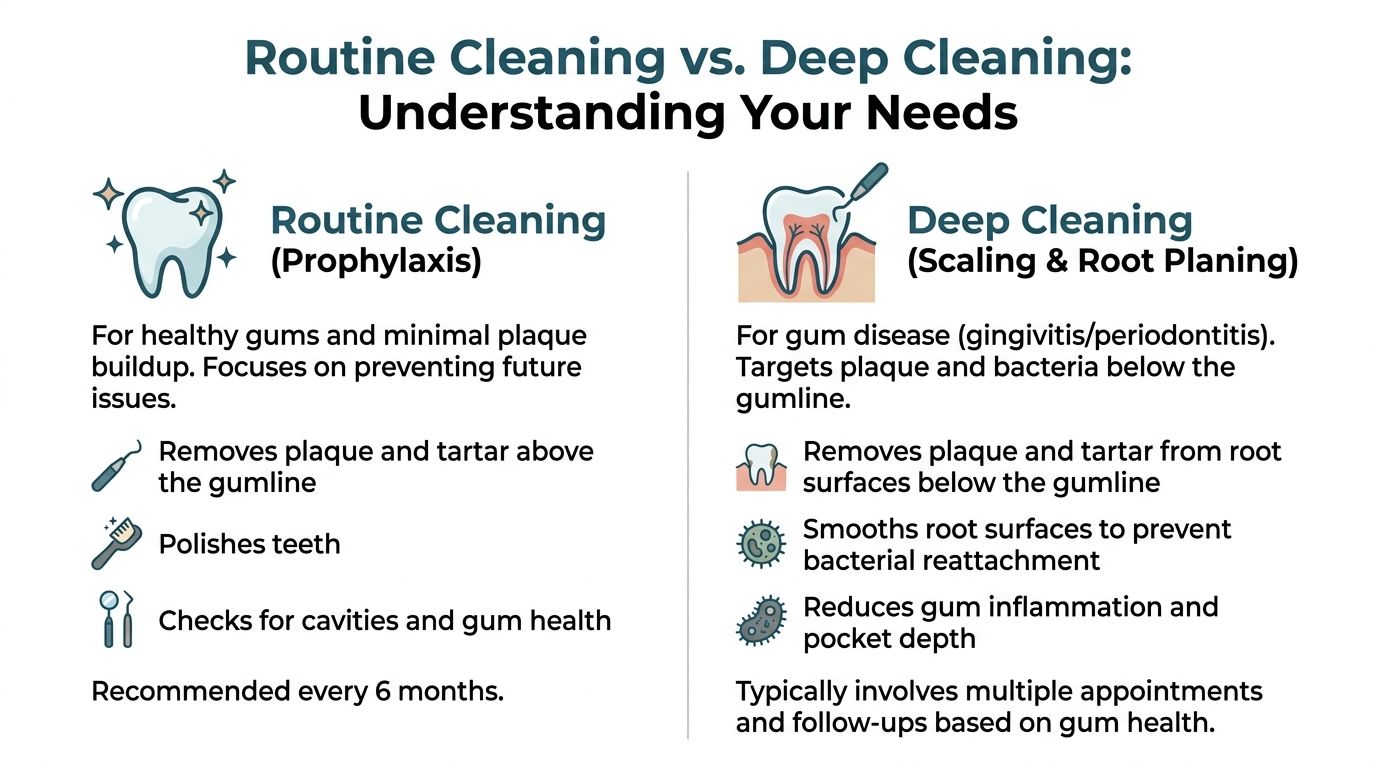
A routine cleaning is preventive. It’s for patients whose gums are healthy or have only mild irritation. The main focus is removing plaque and tartar from the visible tooth surfaces and around the gumline before they contribute to bigger problems.
This type of visit is the familiar cleaning many people expect every six months. It helps maintain health and supports the daily brushing and flossing done at home.
When deeper treatment is recommended
A deep cleaning is called scaling and root planing, or SRP. It’s recommended when the problem isn’t just buildup on the visible part of the teeth, but bacterial deposits below the gumline.
SRP is necessary when periodontal pockets exceed 4 mm, and it has been shown to reduce probing depths by 1 to 2 mm on average, according to this overview of the step-by-step process for deep cleaning.
That’s a treatment for gum disease, not a routine polish-and-go visit. The goal is to clean root surfaces below the gums and create conditions that help the tissue heal.
Patients may notice a few differences:
- Numbing may be used. Deeper cleaning below the gumline can call for local anesthetic.
- More than one visit may be needed. Treatment is sometimes divided into sections of the mouth.
- Follow-up matters. The gums are rechecked to see how well they’re responding.
For readers wanting more home-care guidance after periodontal treatment, this article on maintaining healthy gums and preventing gum disease can help support daily habits.
Deep cleaning doesn’t mean the patient failed. It means the gums need therapeutic care, not just preventive maintenance.
Comparing Dental Cleaning Types
| Feature | Routine Cleaning (Prophylaxis) | Deep Cleaning (Scaling & Root Planing) |
|---|---|---|
| Primary purpose | Prevent future buildup and maintain healthy gums | Treat gum disease below the gumline |
| Main treatment area | Tooth surfaces above and around the gumline | Root surfaces and periodontal pockets below the gumline |
| Typical patient | Someone due for preventive care | Someone showing signs of periodontitis |
| Comfort measures | Usually simple and quick | May include local anesthetic |
| Visit pattern | Regular maintenance visit | Often completed over multiple visits with follow-up |
Knowing the difference helps patients ask better questions. It also helps them understand why a dentist may recommend one service instead of another, even when both appointments are casually called a “cleaning.”
Personalizing Your Care at Amanda Family Dental
Not every patient wants the exact same preventive visit. Some want the most traditional path. Others ask about gentler comfort options, fluoride-free care, or services that make appointments easier for children, anxious adults, or patients with strong personal preferences.

Comfort matters during preventive care
One of the most overlooked parts of a cleaning is how much the experience can be adjusted. Patients who feel nervous may benefit from a slower pace, extra explanation before each tool is used, or additional comfort support such as sleep dentistry when appropriate.
That kind of flexibility matters because fear keeps people away longer than the cleaning itself would. A calm, well-explained appointment can change the way a patient feels about dental care for years.
Examples of personalized support can include:
- Pacing the visit: Short pauses and check-ins can make the appointment feel more manageable.
- Explaining sensations before they happen: Patients tend to feel more settled when they know what the vibration, water spray, or polishing cup will feel like.
- Matching care to age and history: A child’s first cleaning, an anxious adult’s return visit, and a patient with extensive restorative dentistry all need a different approach.
Options for families with different preferences
Many preventive appointments also include a conversation about add-on services and preferences. Some patients want fluoride after cleaning. Some prefer to decline it. Parents may ask about sealants for children who are prone to cavities in back teeth.
Recent data indicates that 15% to 20% of U.S. parents express concern over fluoride treatments, and there has been a 25% growth in demand for fluoride-free visits, according to this summary on dental cleanings and fluoride-free preferences.
A thoughtful office doesn’t treat those questions as unusual. It explains the purpose of fluoride, discusses alternatives when available, and respects informed patient choice.
Some families want a straightforward preventive cleaning. Others prefer a detailed approach. Good care leaves room for both.
Patients also benefit when the cleaning visit connects naturally to the rest of dentistry. If the exam shows early wear, the next discussion might involve restorative care. If staining is the main concern, the patient may ask about cosmetic dentistry or professional whitening. If a broken tooth or pain is found, that may shift attention toward urgent treatment instead of routine maintenance.
Schedule Your Cleaning and Protect Your Smile
A dental cleaning does more than make teeth look polished. It removes buildup that brushing can’t handle alone, gives the dentist a chance to check for early problems, and helps reduce the chance that a small issue turns into pain, infection, or more involved treatment later.
For most patients, the ideal rhythm is simple. A cleaning and exam every six months gives the dental team regular opportunities to monitor changes, clean hard-to-reach areas, and keep the mouth on a healthier track.
That matters for everyday comfort and for long-term planning. Preventive care can support easier chewing, fresher breath, healthier gums, and more confidence in the appearance of a smile. It can also lower the chance that neglected buildup leads to a more urgent visit for a broken tooth, gum infection, or another problem that requires an emergency dentist.
For families comparing a dentist in Amanda, OH, dentist in Lancaster, OH, dentist in Circleville, OH, or dentist in Carroll, OH, the best next step is a new patient exam with a cleaning plan based on the findings. Many patients also want help navigating insurance, payment options, and practical ways to keep routine care affordable over time.
Amanda Family Dental provides patient-focused preventive care for families in Amanda, Ohio, as well as nearby Lancaster, Circleville, and Carroll. Patients looking for clear answers, comfortable cleaning and exams, digital imaging, cosmetic dentistry, restorative care, or help from a trusted local dentist near me can contact the office to schedule a new patient visit.