
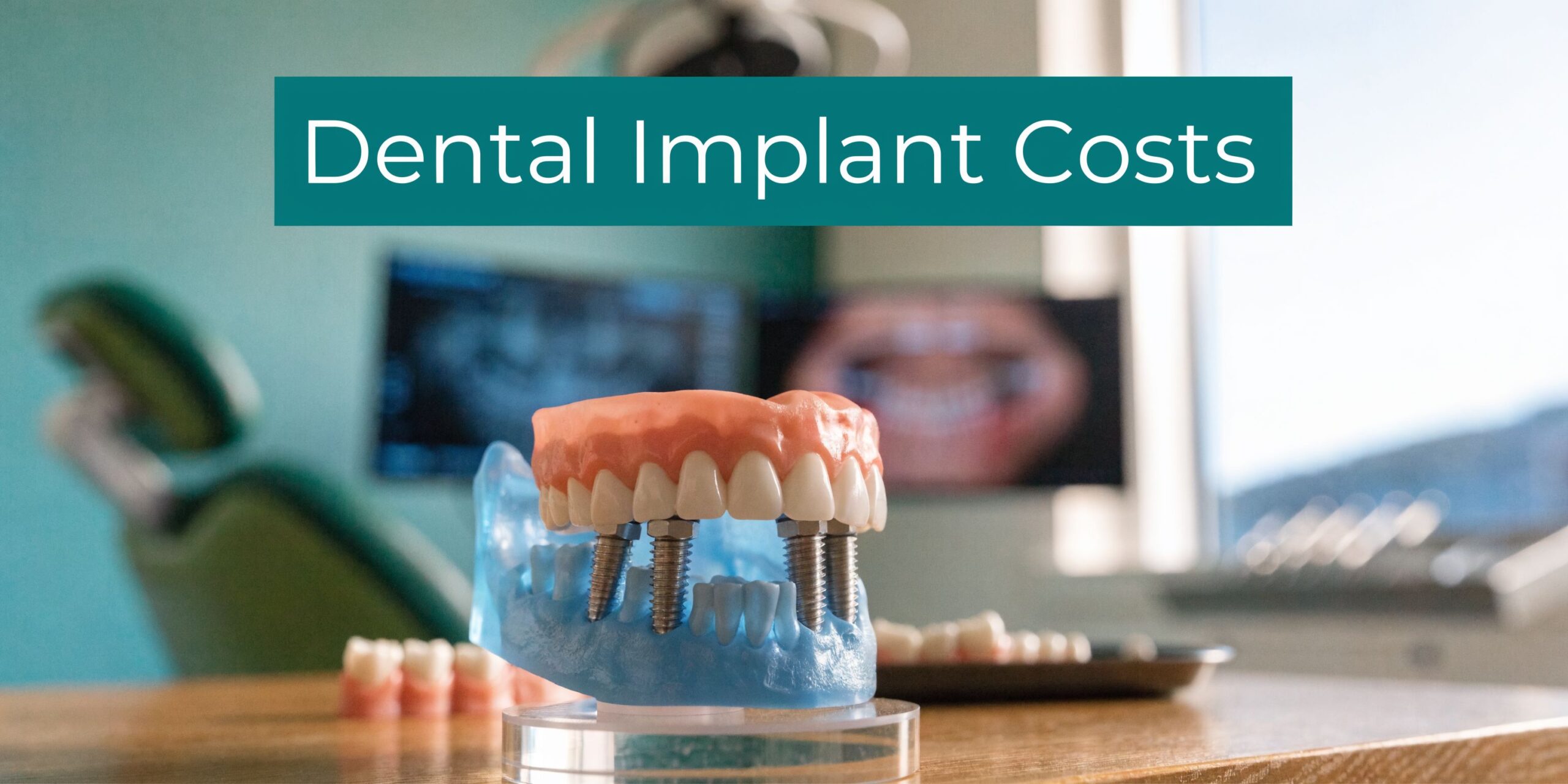
Missing a tooth can change small moments all day long. Many people in Amanda, Lancaster, Circleville, and Carroll start by chewing on one side, smiling with lips closed, or putting off photos because they do not want the gap to show.
Cost is usually the next question. It is also the most common reason people delay treatment. The good news is that the answer is not a mystery when the price is broken down clearly and discussed in the context of long-term function, comfort, and confidence.
For anyone searching how much do dental implants cost, the most useful answer is not a one-line number. It is an honest look at what is included, what can change the total, and how to plan for treatment without surprises.
Table of Contents
- A Permanent Solution for Missing Teeth in Amanda Ohio
- Understanding the Total Cost of a Dental Implant
- Key Factors That Influence Your Final Implant Cost
- Making Your New Smile Affordable in the Amanda Area
- Comparing Dental Implants to Other Tooth Replacements
- Your Dental Implant Journey at Amanda Family Dental
- Frequently Asked Questions About Dental Implants
A Permanent Solution for Missing Teeth in Amanda Ohio
A missing tooth rarely feels like a small issue to the person living with it. Someone in Amanda may avoid laughing openly at dinner. Someone in Lancaster may keep adjusting a partial denture that never feels secure. Someone in Circleville may be tired of soft foods and the feeling that one dental problem has started to affect confidence everywhere else.
That is why dental implants matter. They do more than fill a space. They replace the root and the visible tooth, which helps restore a smile in a way that feels stable and natural in day-to-day life.

Why missing teeth affect more than appearance
A gap can change speech, chewing, and bite balance. Over time, many patients notice that the teeth around the space begin to take on extra strain, and simple things like eating an apple or smiling for a family picture stop feeling effortless.
A removable option can help in some situations, but it does not work for everyone. Some people want a solution that stays in place and feels less like a device and more like their own tooth.
Why implants feel like a long-term decision
Dental implants are often chosen because they are designed to be a permanent tooth replacement option rather than a temporary fix. They are especially appealing for adults who want to avoid the daily movement, bulk, or inconvenience that can come with removable appliances.
Key takeaway: The best implant decisions usually start with a practical question, not a cosmetic one. Can this tooth be replaced in a way that restores normal comfort and function for years?
For many local families, that is the fundamental issue behind the search for dental implants near me. The concern is not only appearance. It is being able to eat comfortably, speak clearly, and stop thinking about the missing tooth all the time.
The financial side still matters, and it should. People deserve straight answers before starting treatment. A useful implant conversation includes what the fee covers, what might increase it, and what options may help make care more manageable close to home in the Amanda area.
Understanding the Total Cost of a Dental Implant
A single implant fee is easier to understand when it is treated like three connected parts instead of one large number. In the United States, the average cost of one dental implant including the implant post, abutment, and crown ranges from $3,000 to $6,000 per tooth, according to the 2025 dental implant cost guide from Smiles of Aurora.
What the full fee usually includes
The implant post is the portion placed in the jawbone. It acts as the foundation for the replacement tooth. The same source places the implant post in the range of $1,000 to $2,500.
The abutment connects the post to the final crown. It is a smaller component, but it plays an important role in the final fit and stability. The same cost guide lists the abutment at $300 to $2,000.
The crown is the part visible above the gumline. It is shaped and shaded to look like a natural tooth. The same source lists the crown in the range of $1,000 to $3,000.
For many patients, this explanation helps reduce sticker shock. The fee is not just for one screw or one appointment. It covers a sequence of parts and steps that work together as a complete restoration.
Dental Implant Cost Components
| Component | Description | Average Cost Range |
|---|---|---|
| Implant post | The portion placed in the jawbone that supports the restoration | $1,000 to $2,500 |
| Abutment | The connector between the implant post and crown | $300 to $2,000 |
| Crown | The visible replacement tooth above the gumline | $1,000 to $3,000 |
Why the breakdown matters
A dental implant is closer to building a house than buying a single item off a shelf. The post is the foundation. The abutment is the connecting structure. The crown is the finished result people see and use every day.
When a quote is presented as one lump sum with no explanation, patients often assume the fee is arbitrary. A clear breakdown shows that the treatment involves surgical care, restorative design, materials, and customization.
Helpful rule: If a patient cannot tell what parts and steps are included in an implant quote, the next question should be what exactly is covered and what is not.
That is especially important for patients comparing implant treatment with a bridge, a denture, or an extraction alone. A low advertised number may not include the final crown, imaging, or any preparatory care. An all-in discussion is usually more valuable than a headline price.
Key Factors That Influence Your Final Implant Cost
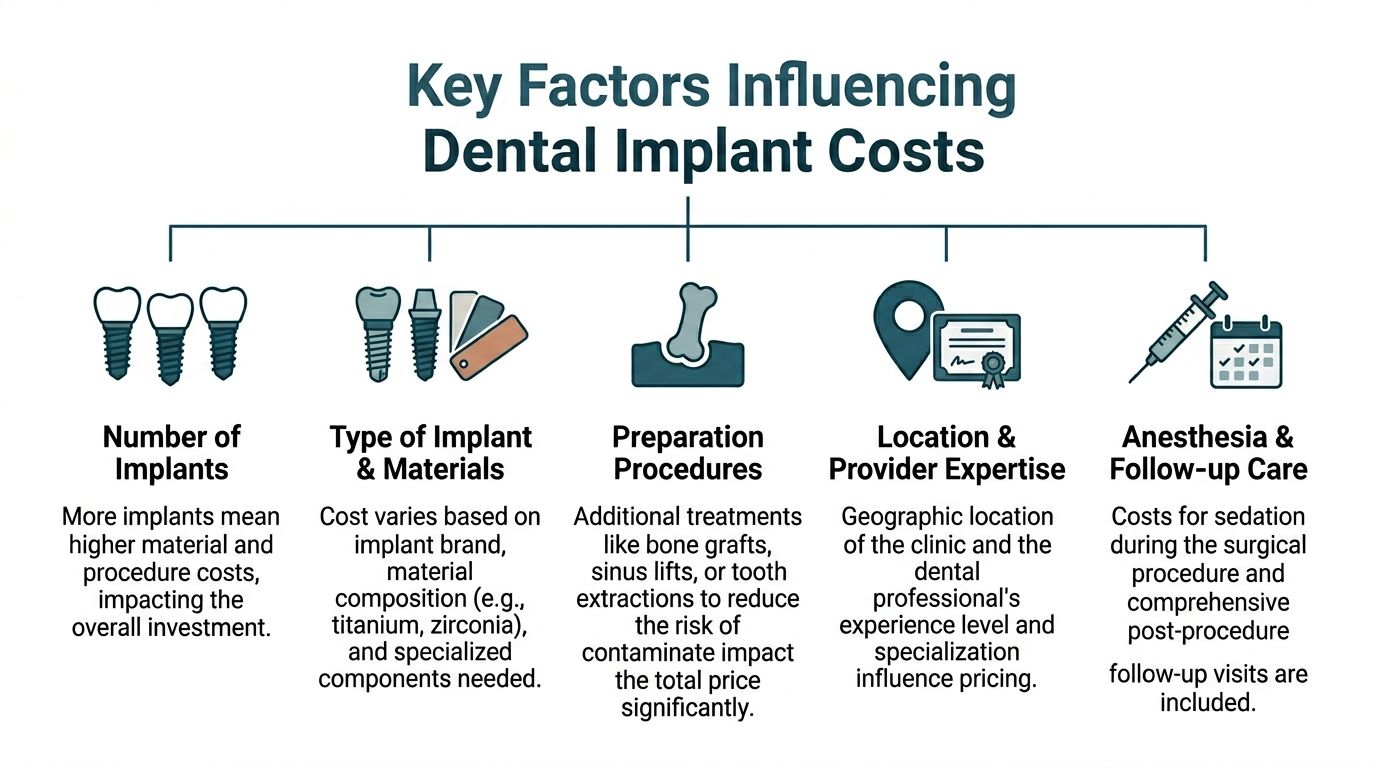
No two implant cases are identical. One person may need a straightforward single-tooth replacement. Another may need additional planning or treatment before the implant can be placed safely and predictably.
According to CareCredit’s dental implant financing guide, the average cost for a single endosteal dental implant is $4,344, and that figure can increase to $5,580 with bone augmentation. The same source states that 30% to 50% of implant candidates need bone augmentation because there is not enough bone volume after tooth loss.
Why two patients can receive different quotes
Bone support is one of the biggest variables. When a tooth has been missing for a while, the jaw in that area may no longer provide the shape or volume needed for ideal implant placement. In those cases, grafting may be recommended before or during treatment.
The same CareCredit source notes that pre-surgical CBCT scans typically range from $250 to $1,000. That scan helps identify bone availability before treatment begins, which is one reason a thorough workup matters so much.
Other factors also influence the total:
- Number of missing teeth: Replacing one tooth is different from replacing several teeth or stabilizing a larger restoration.
- Material choices: Some restorations use different crown materials, and that can affect the final fee.
- Preparatory treatment: A patient may need an extraction or grafting before the implant phase can begin.
- Surgical complexity: Some sites are easier to restore than others based on position, access, and surrounding structures.
What diagnostics add to the process
A detailed consultation is not an extra sales step. It is how patients avoid getting an incomplete estimate.
Digital X-rays and CBCT imaging help map bone, spacing, and placement angles before treatment starts. That leads to a quote based on the actual mouth, not a generic template.
Practical tip: The most reliable implant estimate is usually the one provided after a full exam and imaging review, because it reflects the condition of the bone and the steps needed for that specific tooth.
This is also where patients benefit from transparency. If grafting is likely, it should be discussed upfront. If the site looks favorable, that should be clear too. The right plan is not the cheapest one on paper. It is the one that accounts for what the case needs.
Making Your New Smile Affordable in the Amanda Area
Even when patients understand the value of implants, many still need a realistic way to fit treatment into the household budget. That is normal. A permanent solution should also come with a practical payment plan.

Ways patients often manage the cost
Some patients start with dental insurance. Coverage for implants varies by plan, and many policies cover some parts of treatment more readily than others. The most helpful approach is to verify benefits early and ask for a written estimate before scheduling major steps.
Others use HSA or FSA funds if those accounts are available through work or a family plan. Pre-tax dollars can make a meaningful difference when treatment is planned in stages.
Financing is another common route. Some patients prefer to spread the cost out rather than delay care. Practices that offer flexible monthly payment options can make treatment feel far more approachable for families in Amanda, Carroll, Lancaster, and Circleville.
For patients exploring membership-based savings, the Power Plan Membership is worth reviewing as part of the planning conversation.
Why transparent payment planning matters
A good financial discussion should answer more than one question. It should cover what is due first, what may be scheduled later, and what parts of treatment could change if additional needs appear during diagnostics.
That kind of clarity helps patients compare options. A lower number that excludes imaging, grafting, or the final restoration may not be the lower cost in practice.
This short video offers another helpful look at financing and treatment planning.
Patients often feel more comfortable moving forward when the conversation includes:
- A written treatment estimate: This gives a clearer picture of what is included.
- Phased scheduling options: Some treatment plans can be completed in stages.
- Benefit coordination help: Office teams can often help clarify insurance details.
- Membership or financing review: This keeps the decision focused on what is workable, not just what is ideal.
For anyone searching dentist near me or dental implants near me, affordability is not only about finding the lowest number. It is about finding a treatment plan that is clear, complete, and possible.
Comparing Dental Implants to Other Tooth Replacements
A missing tooth can often be replaced in more than one way. The main alternatives are usually a traditional bridge or a removable denture or partial. Each option has a place. The right choice depends on goals, oral health, budget, and how much long-term stability matters to the patient.
According to Dr. John Patterson’s 2025 dental implant statistics overview, dentures often need replacement every 5 to 10 years, bridges every 10 to 15 years, and implants have a 95%+ success rate and can last a lifetime. The same source also notes that bridges can involve damage to adjacent teeth over time.
How implants compare with bridges
A bridge fills a missing space by attaching to neighboring teeth. That can be a reasonable treatment in some cases, especially when those teeth already need crowns. The trade-off is that healthy nearby teeth may need to be prepared to support the bridge.
An implant stands independently. It replaces the missing tooth without relying on the adjacent teeth for support.
Patients who value a conservative approach often like that difference. Preserving natural tooth structure matters, especially when the teeth on either side are otherwise healthy.
For additional perspective on long-term value, this page on why dental implants are worth it is a useful companion read.
How implants compare with dentures
Dentures and partial dentures can restore appearance and some function, and they usually cost less upfront. For some patients, they are the most realistic starting point.
Still, removable teeth come with trade-offs:
- Movement while eating: Some patients never feel fully secure with removable appliances.
- Daily maintenance: Dentures require a different care routine than fixed teeth.
- Periodic replacement: As noted in the source above, dentures often need replacement over time.
Decision point: If the main goal is the lowest initial cost, removable options may appeal first. If the main goal is fixed function and long-term stability, implants often provide stronger value.
The best comparison is not only about today’s fee. It is about daily comfort, how treatment affects nearby teeth, and whether the patient wants a removable or fixed solution.
Your Dental Implant Journey at Amanda Family Dental
The implant process feels far less intimidating when patients know what the sequence looks like. Most cases follow a clear path from evaluation to final restoration, with each step built around planning and healing.
The first visit and planning phase
The process starts with a thorough exam. That usually includes a discussion of the missing tooth, current symptoms, medical history, and whether the patient has any concerns about comfort, timing, or appearance.
Digital X-rays help evaluate the site. If more detail is needed, 3D imaging may be recommended to check the bone and plan placement precisely.
Patients also receive a personalized treatment plan. That matters because the decision is not only whether an implant is possible. It is whether the site is ready now or would benefit from additional preparation first.
A fuller overview of the process is available in the complete guide to dental implants and what to expect.
Placement healing and the final tooth
When the plan is confirmed, the implant is placed in the jawbone. After placement, the area needs time to heal and integrate before the final tooth is attached. That healing phase is one reason implants are considered a process rather than a one-visit procedure.
Once healing is complete, the final crown is made and attached. The goal is a tooth that blends with the rest of the smile and feels stable during normal eating and speaking.
Patients often find the journey easier than expected because it is broken into manageable steps:
- Consultation and exam
- Imaging and treatment planning
- Any needed preparatory care
- Implant placement
- Healing period
- Final crown placement
Comfort reminder: Patients do best when they ask questions early. Clear expectations about timing, healing, and cost make the entire process more manageable.
Frequently Asked Questions About Dental Implants
Does getting a dental implant hurt
Patients in Amanda often ask this first, and the honest answer is that treatment is usually easier than they expected. The area is thoroughly numbed before placement, and comfort options can be reviewed ahead of time based on your medical history and anxiety level.
Some soreness after the procedure is normal. In my experience, patients usually describe it as manageable and similar to healing after other dental work. Clear home care instructions, rest, and follow-up support make a big difference.
How long do dental implants last
Dental implants are designed for long-term function. The implant itself can last for many years, and in some cases for decades, if the bone and gums stay healthy.
Good home care still matters. Brushing, flossing, and regular dental visits help protect the tissues that support the implant. The crown on top may wear sooner than the implant and sometimes needs replacement over time, which is an important cost detail to understand up front.
Are there hidden costs patients should ask about
The part that changes the final price is often the care around the implant, not just the implant post itself. A patient may need a tooth removed first, bone grafting to strengthen the site, or 3D imaging to plan placement safely and accurately.
That is why a complete consultation matters so much when asking how much dental implants cost.
For patients in Amanda and nearby communities, I recommend asking for a written estimate that clearly shows what is included. Useful questions include:
- Does the fee include imaging, implant placement, and the final crown
- Will I need an extraction or bone graft before the implant
- Are temporary teeth included if the area shows when I smile
- How many follow-up visits are part of the treatment fee
- What portion may be covered by insurance, and what would be paid out of pocket
Clear answers help patients compare options fairly and avoid surprises.
Are implants better than pulling a tooth and doing nothing
Leaving a space open can affect more than appearance. Chewing may become less comfortable, nearby teeth can drift, and the bone in that area can shrink over time.
An implant is not the right next step for every patient on the same timeline, but replacing a missing tooth usually protects function better than waiting for years. The right decision depends on health, budget, and the condition of the bone and surrounding teeth.
If a missing tooth is affecting comfort, chewing, or confidence, Amanda Family Dental can help with a clear evaluation and a personalized treatment plan. Patients in Amanda, Lancaster, Circleville, and Carroll, Ohio can schedule a consultation to review options, understand the full cost, and ask about payment solutions, including membership plan savings when available.